Structured group sessions that address secondary trauma, burnout and cumulative stress where nothing has to be said out loud. Available in Portland Metro, as well as virtually throughout Oregon and Washington.
Evidence-Based Support for the Teams That Never Stop Showing Up

Your team shows up every day for other people. Firefighters, nurses, dispatchers, teachers, attorneys, social workers; the people who hold the hardest things so the rest of us don't have to. And the cost of that is real. Burnout. Secondary trauma. Compassion fatigue. The kind of stress that doesn't clock out at the end of the shift. And for others, in offices, leadership roles, and customer-facing positions, it's the slower accumulation of chronic pressure, constant change, and never quite being able to catch up. The stress looks different, but the weight is just as real.
Most organizations know it's a problem. Far fewer know what to actually do about it.
Standard Employee Assistance Programs were designed for individuals, not teams. A mindfulness seminar doesn't touch what a paramedic carries home after a pediatric call. A one-time lunch and learn doesn't reach the dispatcher who has heard things they can't unhear. And a quarterly wellness newsletter doesn't address what a team absorbs when the organization goes through a layoff, a restructuring, or a year of relentless pressure with no room to breathe.
Your people need something built for what they actually experience. That's what we do.

Evidenced-Based Support Your Team Needs
GTEP-Group Traumatic Episode Protocol
GTEP is a structured group trauma processing experience adapted from EMDR; one of the most extensively researched trauma therapies in the world. It is designed to be delivered to entire teams, not just individuals, making it uniquely suited to organizations.
What makes GTEP different from anything else you've encountered: it is completely blind. Participants process their own experiences privately and silently. No one in the room, not other participants, not even the facilitating clinicians, knows what any individual is working on. There is no sharing circle. No one is asked to disclose anything. What happened stays entirely with the person it happened to.
This matters enormously in high-stakes professional cultures where stigma is real and trust is hard-won. People who would never walk into a therapist's office will participate in GTEP because nothing leaves the room.
GTEP works for acute critical incidents, for ongoing burnout prevention and for the slower, cumulative weight of years in high-stress work.
GREP- Group Resource Enhancement Protocol
GREP is a resilience and resource-building experience, also adapted from EMDR, that helps participants access their own inner strengths, calm, and stability. It uses somatic and arts-based approaches in a structured, facilitated format.
Unlike GTEP, GREP does not involve trauma processing. It is appropriate as a standalone wellness offering or as a companion to GTEP sessions. No prior mental health experience is required. No clinical disclosure. Just a guided experience that helps people reconnect with what steadies them.
GREP is an excellent starting point for organizations new to this kind of work, or for teams that want to build ongoing resilience capacity alongside periodic trauma processing.
Both protocols are delivered by two licensed, EMDR-trained clinicians. Sessions are 2 hours, offered in-person or virtually anywhere in Oregon or Washington.
Who we serve
-
Fire, Law Enforcement, EMS, 911 Dispatch
First responders run toward the things most people spend their lives trying to avoid. The calls stack up. The images stay. And in a culture where strength is the expectation, there is rarely a safe place to put any of it down.
We understand that culture. GTEP was built for it. Because nothing is ever disclosed and nothing is ever shared, there is no vulnerability required to walk through the door. Your team doesn't have to become therapy patients. They just have to show up.
We offer one-time critical incident sessions following major events and ongoing monthly sessions for departments that want to stay ahead of cumulative trauma.
-
Hospitals, Commmunity Health Centers, Emergency Departments
Healthcare workers are trained to absorb, stabilize, and move on. What that training doesn't prepare anyone for is the long-term weight of witnessing suffering every single day without adequate space to process it.
Burnout, secondary traumatic stress, and moral injury are the predictable result of doing this work without support that is equal to what the work demands. GTEP and GREP meet that standard. Sessions can be tailored for specific departments, shifts, or facility-wide wellness programming.
-
K-12 Districts, Higher Ed, Student Support Staff
Educators and school staff are often the first adults in a child's life to see what that child is carrying. Poverty, family crisis, trauma, violence. Absorbing that, day after day, changes people, even the ones who love the work deeply and wouldn't trade it.
School staff are expected to be fully present for students while having almost no parallel support for themselves. GTEP and GREP offer something most professional development programming never does: a real opportunity to process and restore, not just learn another strategy to implement.
We work with full staff, department teams, counseling and support staff, and administrators.
-
Public Defenders, District Attorneys, Legal Aid, Law Firms
Legal professionals work inside some of the most emotionally demanding material imaginable. Violence, abuse, injustice, grief. Public defenders and prosecutors absorb the weight of cases that don't stay in the courtroom. Legal aid attorneys sit with poverty and desperation, case after case, year after year.
The legal profession has among the highest rates of burnout and depression of any field, and the culture makes it one of the hardest places to ask for help. GTEP's blind processing model fits that culture precisely. Nothing is disclosed, nothing can be used against anyone, and the work each person does in the room stays entirely their own.
-
HR, Operations, Management, Customer-Facing Staff
Workplace stress doesn't have to be dramatic to be damaging. Layoffs, leadership instability, relentless pressure, difficult client relationships, and the slow grind of never quite catching up all accumulate over time in ways that affect how people work, how they feel, and how long they stay.
GTEP and GREP are designed for teams that are carrying more than they have had space to put down. GREP builds resilience and steadiness. GTEP addresses the harder material that builds up beneath the surface. We work with HR departments, leadership teams, and employee wellness programs to fit sessions into your existing calendar.
-
Social Workers, Case Managers, Community Mental Health Staff
Social workers and human services professionals are among the most trauma-exposed workers in any sector, and among the least resourced when it comes to their own care. The work is meaningful. It is also relentless, and the systems that hold it are rarely adequate to the need.
We are clinicians who came from this world. We understand caseloads, vicarious trauma, moral injury, and the particular exhaustion of doing work that matters deeply inside systems that weren't designed to sustain the people doing it. Many nonprofits have access to grant funding or state allocations designated for staff wellness. We are glad to provide documentation to support those requests.
What to Expect

Step 1 — Free Consultation We start with a 20-minute call to learn about your team, recent events, and what you're hoping to address. No obligation, no sales pitch.
Step 2 — Custom Proposal We send you a one-page written proposal outlining the recommended protocol, format, session date, and fee. Everything in plain language.
Step 3 — Pre-Session Coordination We handle the heavy lifting, but there are a few things we'll need from you to ensure smooth preparation and a successful session.
Step 4 — The Session Two licensed clinicians arrive ( or log on) and facilitate a full 2-hour session. Participants need only show up (pre-session worksheet printing for virtual sessions recommended). Nothing else is required of them beyond presence.
Step 5 — Debrief Following the session, we check in briefly with your designated contact. You'll receive confirmation of what was delivered and aggregate data if pre/post distress levels were collected. Nothing about individual participants is shared.
Wellness programs are available in-person throughout the Portland metro area and virtually, anywhere in Oregon or Washington. The fee is the same either way.
Meet the Clinicians
We are two Oregon and Washington licensed therapists with years of clinical experience, specialized trauma training, and a genuine investment in the wellbeing of the people who do the hardest work in our communities. In addition to our private practices, we both serve as tenured faculty counselors at a local college, where we work directly with students navigating stress, trauma, and mental health challenges every day. We built this program because we saw the need firsthand and because we knew the tools existed to meet it.
Valentina Pishchanskaya-Cayanan, LMFT
Cayanan Counseling and Wellness
Valentina is a Licensed Marriage and Family Therapist and an Integrative Mental Health Provider with a clinical focus on trauma, burnout, anxiety, and the long-term effects of chronic stress. Her approach is holistic by design because she works with the whole person, attending not just to symptoms but to the broader systems, relationships, and circumstances that shape how people feel and function.
Her therapeutic toolbox includes EMDR, somatic approaches, mindfulness, CBT, strengths-based and solution-focused methods, and intergenerational trauma work. As a Ukrainian-born immigrant with deep roots in two cultures, Valentina brings a lived understanding of what it means to navigate high-stress environments while holding onto identity and purpose. That perspective shapes how she shows up in every room she walks into.
Beyond her clinical practice and extensive public speaking experience, Valentina serves as Vice President on the board of DAWN Inc., a nonprofit dedicated to preserving Ukrainian cultural heritage, supporting displaced and immigrant Ukrainians in Oregon and providing life-saving aid to Ukrainian defenders. This work reflects her commitment to community wellbeing that extends well beyond the therapy room. For additional information you can visit the following pages: Clinical Approachand Presentations and Workshop Facilitation.
Shayna Collins, LPC
Adnei Wellness
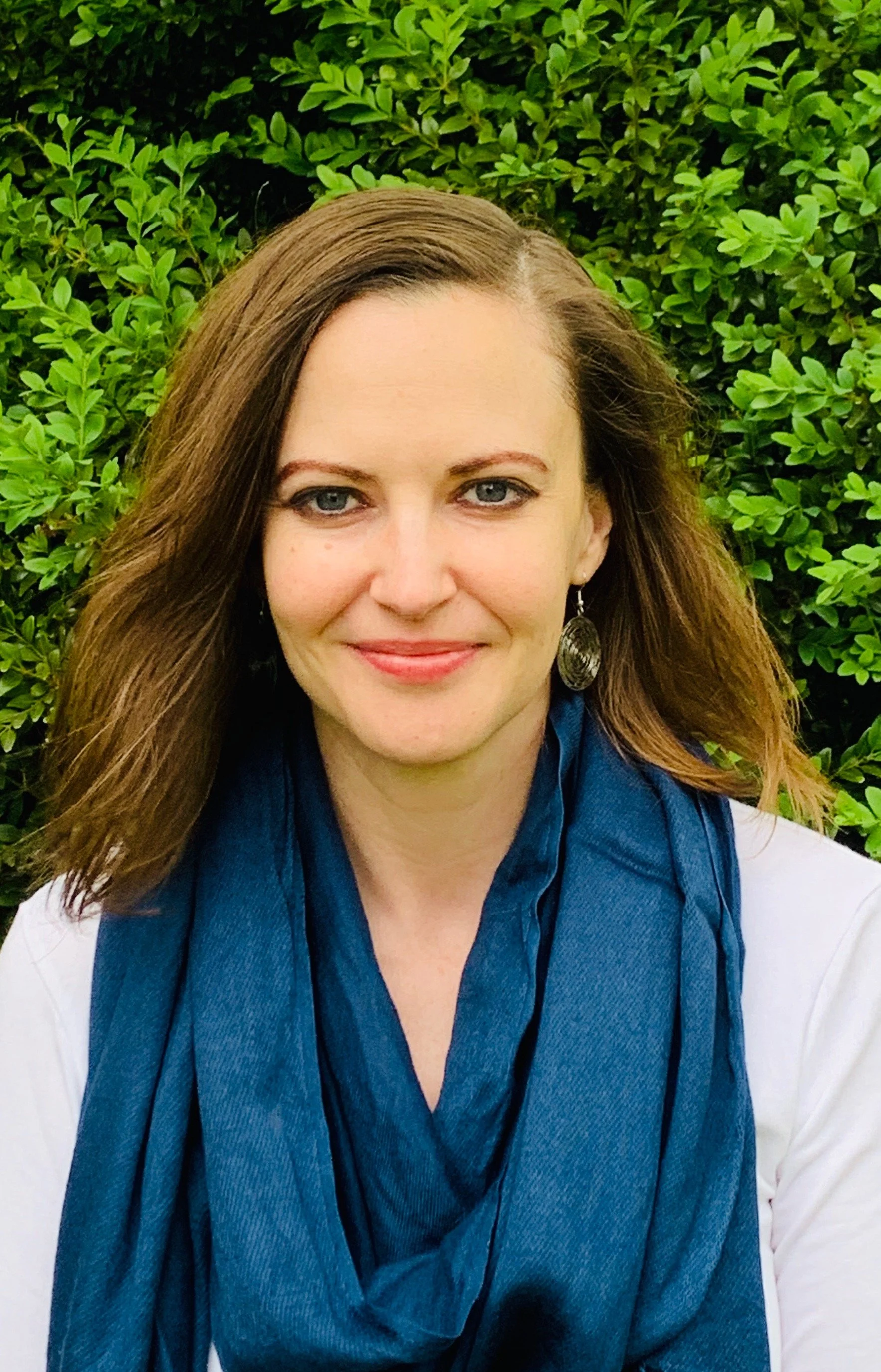
Shayna is a Licensed Professional Counselor and Licensed Mental Health Counselor with a specialization in trauma across the full spectrum, from single-incident stress to complex PTSD. She is a Certified EMDR Therapist, a designation that reflects advanced training and supervised clinical hours beyond basic EMDR training, and one that relatively few practitioners hold.
Her clinical approach is holistic, integrative, and genuinely collaborative. In addition to EMDR, Shayna is trained in clinical hypnosis, somatic and body-centered therapy, CBT, narrative therapy, and mindfulness approaches. She works from a neurodiversity-affirming, culturally humble framework and has deep experience with the kinds of layered, complex presentations that show up when people have been carrying too much for too long.
Shayna brings warmth and steadiness to her facilitation; qualities that matter enormously when you are asking a room full of people who are accustomed to holding it together to do something unfamiliar. Additional information about Shayna can be found here.
Questions?
FAQs
-
No. GTEP and GREP are structured wellness protocols delivered in a group setting. They are not individual psychotherapy, and participating does not create a clinical relationship between any individual participant and our practice. That said, they are grounded in the same evidence base as some of the most effective trauma therapies available.
-
Both facilitating clinicians are licensed therapists in Oregon and Washington trained to recognize and respond to distress. If a participant appears to be struggling, a clinician will check in with them privately and, if appropriate, offer referrals to individual support. The session structure itself is designed to be titrated and manageable.
-
For ongoing wellness and burnout prevention, we recommend monthly sessions. This allows teams to process new incidents as they arise and continue building resilience over time. One-time sessions are also available for organizations responding to a specific critical incident or wanting to pilot the program before committing to a schedule.
-
Pricing varies based on organization type and session format. Reach out and we will give you a customized quote.
-
We operate as an independent service and do not bill through EAP panels. Many organizations fund sessions through existing HR, employee wellness, or professional development budgets. We can provide documentation to support internal funding requests or reimbursement processes.
Your Team Has Given Enough. Let's Give Something Back.
A free 20-minute consultation is the best way to get started. Tell us about your team, and we’ll create a customized quote that will fit your needs and put your team on the path to sustainable wellness.
Connect with us directly:
Valentina Pishchanskaya-Cayanan
Email: valentina@cayanancounseling.com
Phone: 503-908-9951
Shayna Collins
Email: shayna@adneiwellness.com
Phone: 971-225-7580